

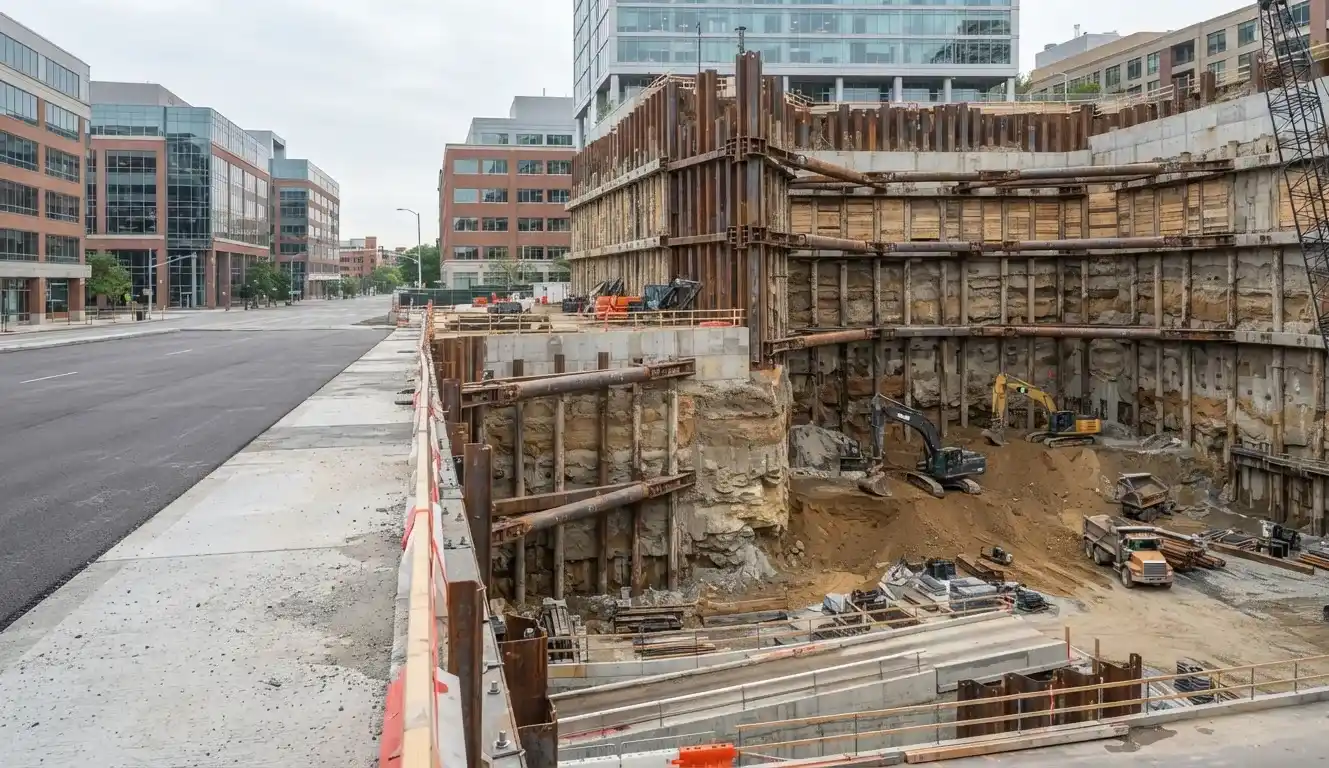
- Excavation works are among the most critical and high-risk activities in construction and infrastructure projects. Engineers must assess complex interactions between soil conditions, groundwater, nearby structures, excavation depths, and temporary support systems.
- Traditional excavation assessments often involve extensive manual calculations, multiple design iterations, and the review of large volumes of geotechnical information. Unexpected ground conditions, inadequate support systems, or overlooked risks can lead to instability, project delays, safety incidents, and significant cost overruns.
- As projects become increasingly complex and urban environments become more constrained, excavation planning requires faster and more reliable decision-making than ever before.
Excavation AI
Safer Excavations. Smarter Temporary Works.

Overview
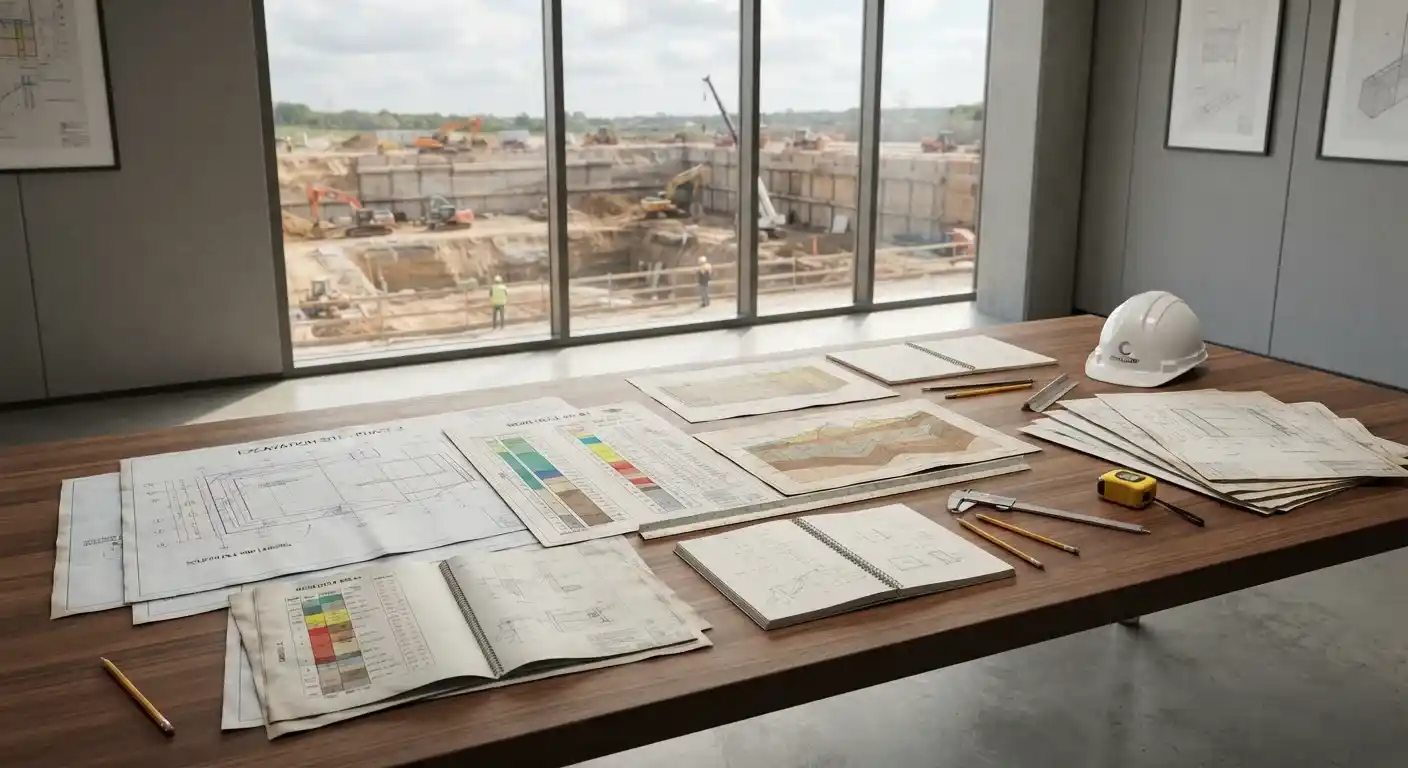
Excavation AI is an intelligent engineering platform designed to support excavation planning, temporary works assessment, and excavation support design. By analyzing ground conditions, excavation geometry, construction sequencing, and project requirements, the system helps engineers evaluate excavation stability, identify potential risks, and recommend appropriate support measures.
The platform provides data-driven insights that improve safety, reduce uncertainty, and help project teams make informed decisions throughout the excavation lifecycle.
Challenges
Solution
- Excavation AI helps engineers evaluate excavation scenarios quickly and confidently. The platform analyzes geotechnical models, excavation layouts, groundwater conditions, and construction methodologies to identify potential risks and recommend suitable temporary works solutions.
- The AI reviews excavation support requirements, assesses stability concerns, highlights critical design considerations, and provides engineering recommendations that align with project objectives and industry best practices.
- By automating much of the assessment process, Excavation AI enables engineering teams to improve safety, reduce planning time, and optimize excavation support strategies before construction begins.
Key Features
How it works?
Why Use Excavation AI?
Excavation-related failures can result in significant financial losses, safety incidents, project delays, and reputational damage. Early identification of risks and appropriate temporary works planning are essential for successful project delivery.
Excavation AI helps engineering teams evaluate excavation scenarios more efficiently while maintaining high technical standards. By providing intelligent recommendations and risk-based insights, the platform supports safer construction practices and more confident engineering decisions.
The result is improved project safety, reduced uncertainty, and more efficient excavation planning.
Who Can Benefit?
Excavation AI is designed for organizations involved in excavation design, temporary works planning, and construction risk management, including:
- Geotechnical Engineering Consultants
- Civil & Structural Engineering Firms
- Construction Contractors
- Infrastructure Developers
- Transportation Authorities
- Mining & Resources Companies
- Temporary Works Engineers
- Government Agencies Managing Major Projects
The platform helps teams make faster, safer, and more informed excavation decisions across projects of all sizes.
Where Excavation AI Creates Value?
Deep Excavations: Assess excavation support requirements for basements, underground structures, and major infrastructure developments.
Urban Construction Projects: Evaluate risks associated with nearby buildings, utilities, roads, and sensitive infrastructure.
Retaining Structures: Support the design and assessment of retaining walls, sheet piles, soldier piles, and anchored systems.
Tunneling & Underground Works: Analyze excavation stability and temporary support requirements for underground construction activities.
Mining & Resource Projects: Improve excavation safety and temporary works planning in mining operations.
Infrastructure Developments: Support excavation design and construction planning for transportation, utilities, and large-scale public infrastructure projects.
High-Risk Construction Sites: Provide additional engineering confidence where ground conditions or project constraints increase excavation risks.